Prochaine édition : du 11 au 13 juin 2011
Guest List
 
Archives - In English - Guest List
 

BARRIERE Michèle

France

publié le 17 mars 2008.

BARRIERE Michèle is a historian in gastronomy and demography. She was born in 1953. She is a member of De Honesta Voluptae, an association of historians who follow in Jean-Louis Flandrin’s footsteps (world-famous historian, and a specialist on sexuality, family and food trade).

After having worked in various environmental associations from 1977 to 1983, she became a member of the International Liaison Comity for the Environment of Nairobi.

Michèle Barrière is the author of a documentary series called “Histoire de cuisine” which was broadcast on Arte. She also writes articles for the monthly Régal and she is a member of the scientific council on slow food (which is a movement for the survival of the world cookery heritage).

With her first novel, Meutre à la pomme d’or published in 2006, the author - fascinated by the history of cookery – embarked in the cookery detective genre. She has published a third book called Natures mortes au Vatican and has come back with a fourth in 2009, Les soupers assassins du régent.

En Français


Bibliography :

- Les soupers assassins du régent (Agnès Vienot, 2009)
- Natures mortes au Vatican : Roman noir et gastronomique en Italie à la Renaissance (Agnès Vienot, 2007)
- Souper mortel aux étuves : Roman noir et gastronomique à Paris au Moyen-Age (Agnès Vienot, 2006)
- Meurtre à la pomme d’or (Agnès Vienot, 2006)


Synopsis of Les soupers assassins du régent

The action takes place in 1718. Baptiste Savoisy, sole supplier of Champagne wines to the Palais Royal travels to Reims to visit Brother Oudart in order to buy his production. It is a highly important mission as the regent, Philippe II d’Orléans, consumes a good 200 bottles at his famous dinners. In the company of Claude Moët, Baptiste findss the body of Brother René and Oudart, who has been seriously injured. When Oudart recovers, his questions deal only with whether his colleague has died without revealing his fabrication secrets. Will Savoisy and Moët be willing to help him look for the bottle breakers ?
Three years after the death of Dom Pérignon, white bubbly has stirred up a lot of controversy. It has been said that the wine from Reims stings, tickles the nerve endings, excites people and renders them more moody and subject to gout. The problem is not only one of health. Indeed, the community of wholesale merchants asserts that wine has always travelled in casks and that it is their job to sell it to the bars, taverns and hotels who in turn sell it to their clients by the pot or the pint. It is heresy to think that the system will be changed for a tart wine that twists your nose out of joint. In any event, they will never succeed in their endeavour. Everyone knows that half of their bottles blow up in their faces.
A lot of ink, and blood, has been spilled over the Regent’s favourite drink. Baptiste is the first target of these attacks : broken glasses, deadly assaults and even poisonings. What is the secret of the bubbly wine ? Who would expose themselves to such carnage for just a few bottles of wine ? Could there be an attempt to reach the Regent through his favourite drink ?

Synopsis of Natures mortes au Vatican

The action takes place in Rome in 1570. Princes and cardinals hold fabulous receptions. Frascati wine flows and the courtesans are beautiful. François, the protagonist of Meurtres à la pomme d’or, has become the private secretary of Bartolomeo Scappi, the Pope’s personal chef. He helps him write his Opera, a compendium of a thousand excellent recipes : an asparagus pie, a Hungarian cream, an eggplant cake, parpadella in hare broth, sage pigeon, etc. François and his friends, poets and seekers of marvels, thoroughly enjoy their taste of the dolce vita.
But worrisome events occur : the painter Arcimboldo has been kidnapped, François falls victim to odious blackmailing and a lover’s encounter turns into an orgy and a massacre. Will François succeed in foiling the traps of an art collecting cardinal ? Will he manage to escape from the Inquisition ? Readers who are fond of adventure and gastronomy will follow him from Rome to Naples and on to Geneva. His quest will parallel history where the upheavals of the end of the Renaissance period and the violence and death exacerbate a taste for beauty and life.


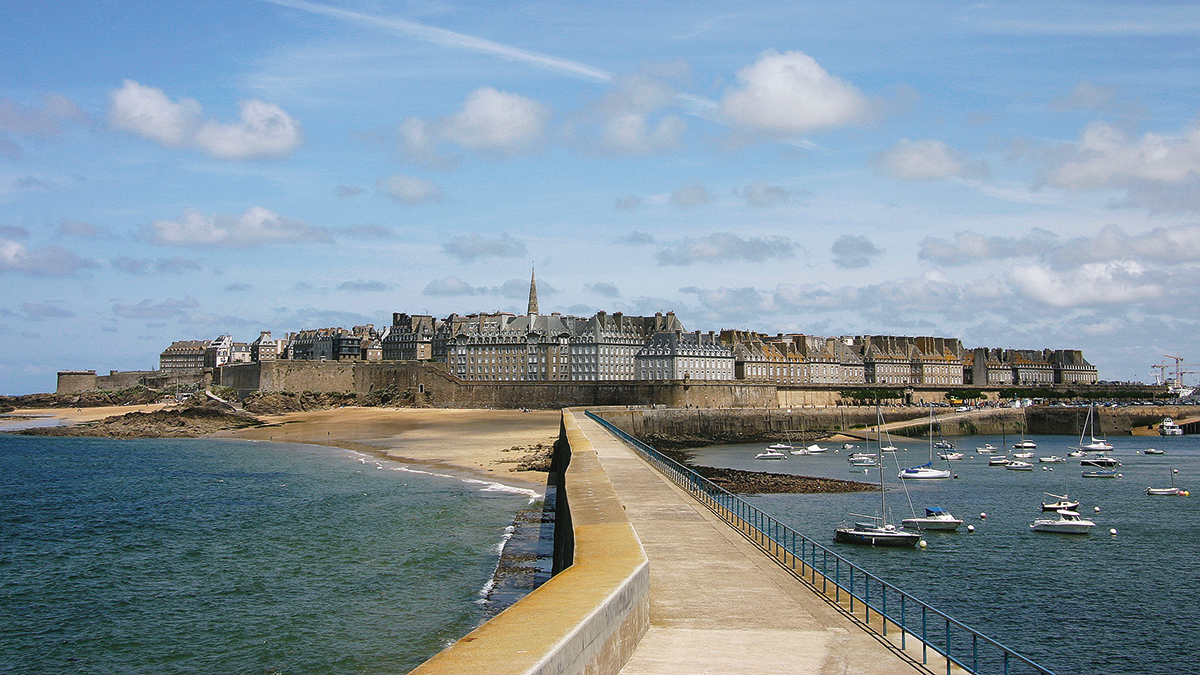
Saint-Malo
Suivre la vie du site RSS 2.0