France
Michel Le Bris, founder and director of the Etonnants Voyageurs festival is a writer, philosopher, journalist and publisher. He was born in the area of the bay of Morlaix near the end of the Second World War. He has remained extremely attached to his country of origin and still lives there. He is a traveller with a need for roots as well as the sea, "I was born at the seaside and will always need the sea."
He undertook studies in economics (HEC 67), yet studied philosophy in Nanterre at the same time. That is where he met Emmanuel Levinas, who with Henry Corbin had a deep influence on his personal convictions. In 1967, he contributed – with a team composed of Jean-Jacques Brochier, André Glucksmann and Raymond Bellour - to the founding of a literary weekly, Le Magazine Littéraire. He became director of monthly Jazz Hot, and linked up with the jazz intelligentsia, thus contributing to the explosion of free jazz in France. His team was composed of Patrice Blanc-Francard who later became famous with his les Enfants du rock, Philippe Constantin, a great artistic director now deceased, remembered through the Constantin song award, Daniel Caux, Yves Buin, the writer, Daniel Berger, and Guy Kopelovici, as well as two photographers, Philippe Gras and Horace.
The tumults of May 1968 played a key role in his life. Michel Le Bris decided to get involved and… ended up spending eight months in jail for having directed an independent revolutionary newspaper, La Cause du Peuple. Jean-Paul Sartre took over from him and the case made the international news. Jean-Paul Sartre could not be locked up. When he came out, he took over the direction of the J’Accuse newspaper that had been founded by the proletarian left and a group of intellectuals. Jean-Paul Sartre, Michel Foucault, Maurice Clavel, Jean-Luc Godard, André Glucksmann, Jacques-Alain Miller, Jean-Claude Milner, Christian Jambet, Françis Bueb all also contributed to that newspaper. He was not long involved with the Mao movement and left Paris to settle in the Languedoc region with his wife Eliane. But he remained close to Maurice Clavel and Jean-Paul Sartre with whom he created the La France Sauvage collection at Gallimard. He took an active part in the debate on totalitarianism happening at the time.
In the 70’s, he became one of the founding members of the daily Libération. He published several works, among which Levi Strauss at Editions Universitaires in 1970 under the pseudonym Pierre Cressant, some writings for the La France Sauvage collection, such as Les fous du Larzac in 1975. But he published what he considered to be his first real book in 1977, L’homme aux semelles de vent, a first manifesto for an adventurous literature which gives a radically new interpretation to German romanticism – a reflexion that he explored further in Le Paradis perdu (Grasset, 1981) and Journal du romantisme (Skira, 1981), the latter hailed as a major literary event, translated into five languages and awarded numerous prizes. A longer, more developed version of it was published by Flammarion in 2002 under the title Le défi romantique.
He is very knowledgeable about the Wild West and about North American history generally. He has written several books on the subject, such as the novel Les flibustiers de la Sonore (Flammarion, J’ai lu, 1998), a travel narrative, La Porte d’Or (Grasset, 1986) a historical essay, Quand la Californie était française (Le Pré aux clercs, 1999) a book for the Gallimard-Découvertes collection, La fièvre de l’or, in 1988 and a travel narrative on the natural parks in the USA, L’Ouest américain, territoire sauvage (Le Chêne, 2005)... He has also contributed to numerous rare editions of oeuvres such as probably the most complete edition of Lewis and Clarke’ diaries in two volumes : La Piste de l’Ouest, Le grand retour (Phébus, 1993).
A Stevenson expert, he has written a monumental biography of him : Les années bohémiennes, NiL éditions, 1994) and an essay Pour saluer Stevenson, (Flammarion, 2000) and has worked with several publishers on the republication of most of his oeuvre – some of which are not even available in English ! He has contributed to a republication of his Essais sur l’art de la fiction – for the French version (Payot Poche, 1992) as well as an edition of his correspondence with Henry James (Une amitié littéraire, Payot Poche, 1994).
Michel Le Bris has also worked with the publisher Phébus to publish the quasi totality of the major classics of buccaneering. Hachette littérature have published his first volume on the history of buccaneering in 2004 (for the new and revised edition) D’or, de rêves et de sang.
He has also written many books about Brittany, most notably, the very personal Un hiver en Bretagne in 1996.
From 2000 to 2006, Michel Le Bris served as general director of the Art Centre of the Abbey of Daoulas where he organized exhibitions on various themes, such as the Dogons, Voodoo, the Plains Indians, pirates and buccaneers of the Caribbean, fairies and elves, Amazonian dreams, masks of Asia : faces of gods, faces of men and Europe at the time of the Vikings. All of these exhibitions led to the publication of special companion editions by Hoëbeke.
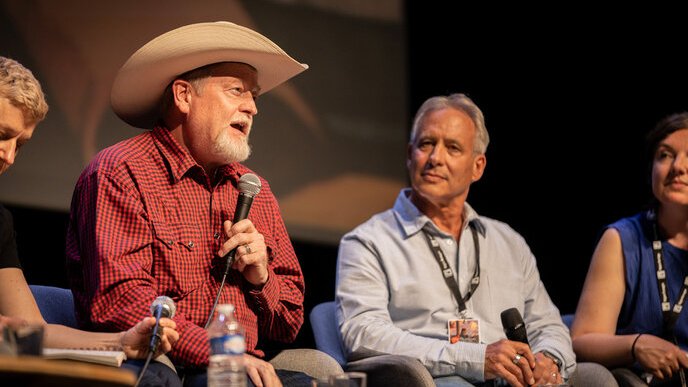
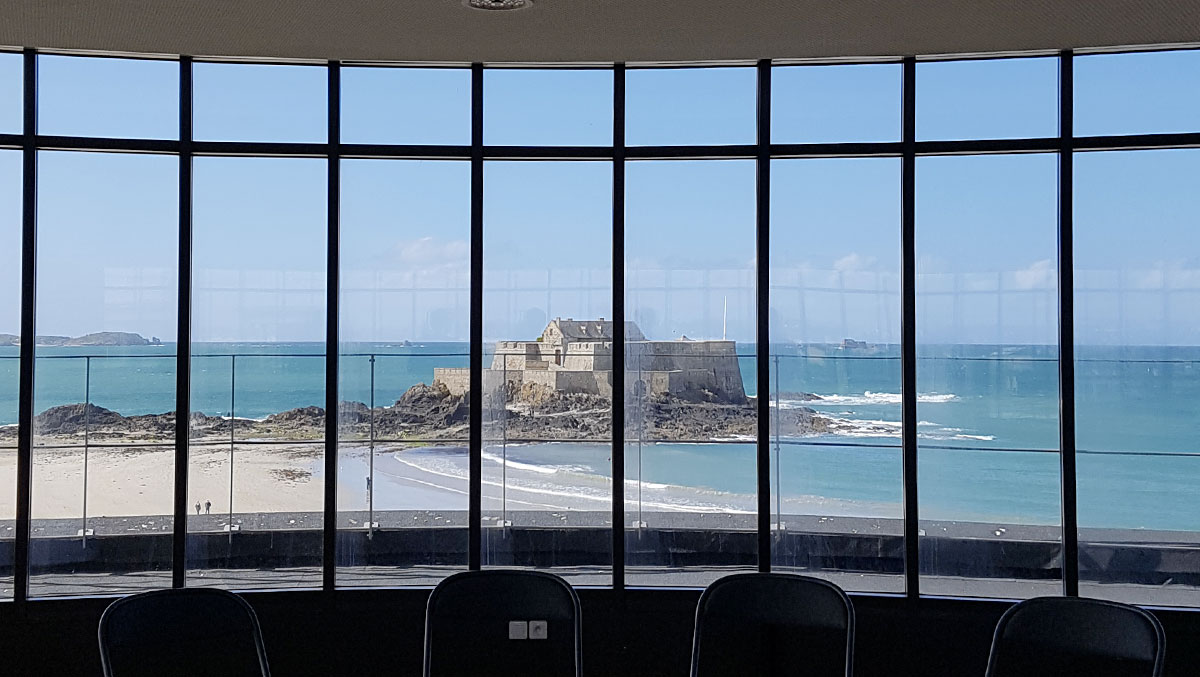
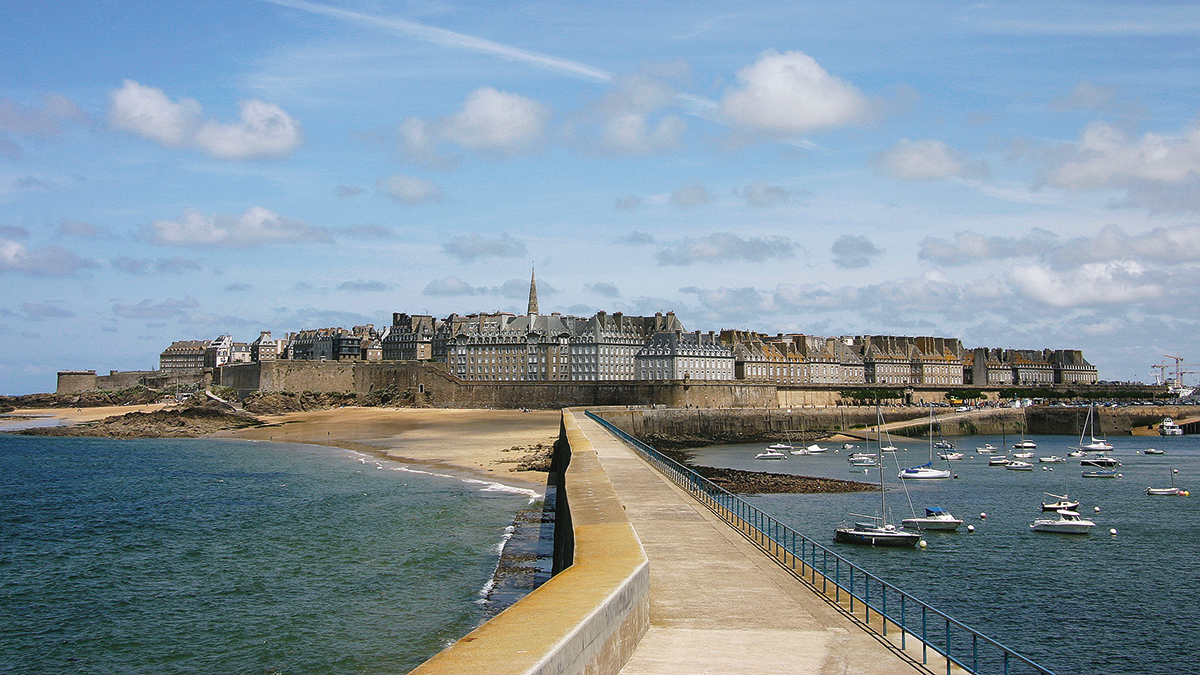
In 1990, exasperated by the literary trends dominating the world of letters in France at the time, he decided to start promoting a concept of literature that would be adventurous, open to the world and anxious to broadcast it. Consequently, he founded a quarterly magazine, Gulliver, and gathered around this new idea of literature his writer friends in France and abroad. He created several new collections, at Phébus, Payot and la Table Ronde. In 1992, he founded the traveller-writer movement and proposed a new term, that of world literature. He was first to publish Nicolas Bouvier and discovered dozens of other writers such as Redmond O’Hanlon, Anita Conti, Ella Maillart, Patrick Leigh Fermor, Norman Lewis, Jonathan Raban, Colin Thubron, Edward Abbey, Peter Matthiessen. He published over 400 books in the space of fifteen years ! And that same year, he also created the Etonnants Voyageurs festival in Saint-Malo along with Christian Rolland, Maëtte Chantrel and Jean-Claude Izzo who for years was in charge of relations with the press. There were several offshoots of the festival abroad : in Missoula (in the state of Montana, USA), Dublin, Sarajevo (in cooperation with the Centre André Malraux), Bamako, Port-au-Prince in Haïti, and Haïfa in Israel.
In 2007, he – along with Alain Mabanckou, Jean Rouaud and Abdourahmane Waberi - initiated the publication of a manifesto for a world literature, signed by forty-four writers from the international community working in one common language, French.
With Jean Rouaud, he has been co-directing Pour une Littérature-Monde at Gallimard, comprising twenty-five texts and thus continuing the debate started by the manifesto.
Michel Le Bris has also published a novel in 2008 at Editions Grasset, La beauté du Monde which tells of the travels of two adventurers, Martin and Osa Johnson and also, at the end of 2008, an album - L’esprit d’aventure, N.C. Wyeth - containing 140 reproductions of works by the artist he considers to be the greatest in the history of illustration.
Bibliography (In French) :
L’esprit d’aventure, N.C. Wyeth (Hoëbeke, 2008)
La beauté du monde (Grasset, 2008)
Pour une littérature-monde (Gallimard, 2007)
Visages des dieux Visages des hommes : Masques d’Asie (Hoëbeke, 2006 - ouvrage collectif)
Rêves d’Amazonie (Hoëbeke, 2005 - avec Pascal Dibie)
D’or, de rêves et de sang (Hachette-Pluriel, 2004)
L’Europe des Vikings (Hoëbeke, 2004 - avec Claudine Glot)
Vaudou (Hoëbeke, 2003 - ouvrage collectif)
Fées, elfes, dragons et autres créatures des mondes féériques (Hoëbeke, 2002 - ouvrage collectif)
Les mondes Dogon (Hoëbeke, 2002 - ouvrage collectif)
Bretagne du monde entier (National Géographique, 2002)
La Cuisine des flibustiers (Phébus, 2002 - avec Mélani Le Bris)
L’Aventure de la flibuste (Hoëbeke, 2002)
Le défi romantique (réédition Flammarion, 2002 de Le Journal du romantisme)
Mondes Blancs (J’ai Lu, 2001)
Les flibustiers de la Sonore (J’ai lu, 2000)
Etonnants voyageurs (Hoëbeke, 2000 - avec Jacques Chambon)
Pour saluer Stevenson (Flammarion, 2000)
Baie de Morlaix (Apogée, 1999)
Quand la Californie était française (Pré aux Clercs, 1999)
Un hiver en Bretagne (Nil éditions, 1996)
Le grand dehors (Payot, 1992)
La fièvre de l’or (Gallimard, 1988)
La porte d’or (Grasset, 1986)
Le Journal du romantisme (Skira, 1982 ; Flammarion, 2002)
Le paradis perdu (Grasset, 1981)
L’homme aux semelles de vent (Grasset, 1977 - Payot, 2006 ré-édition)
Synopsis of La beauté du monde :
In the 1920s, Martin and Osa Johnson were the king and queen of adventure. Martin started out by accompanying Jack London as a cook on the cruise of the Snark. He then invented the adventure genre for the cinema. Osa, the glamorous adventurer, was actually the model for the heroine of the famous King Kong. Hemingway wrote about them that they were the first to break down the myth of Dark Africa. Martin and Osa were considered in America as true lovers of adventure. In 1938, Winnie is tasked with writing Osa’s memoirs. Osa at that point has become a widow and her beauty having faded, she has found refuge in alcohol, but she has remained haunted with the beauty of the world. From the New York of the Roaring Twenties to the splendours of the Kenyan jungle at the start of creation, from the Round Table at the Algonquin where Dorothy Parker was Osa’s godmother, to the Harlem jazz clubs where prohibition was defied and jungle style jazz was coming into vogue to scenes of a primitive world that had somehow been preserved, Michel Le Bris conjures up an entire era through the fate of one woman. The spirit of exotic adventure is ever present in this superb and imaginative saga.
Synopsis of Pour une Littérature-Monde :
Recent French literary awards – the jury members are to be commended for their decisions – have brought to the light what a closed milieu had until recently tried to obfuscate, and that is that French literature cannot be reduced to a simple desiccating narcissistic contemplation of its own constrictions ; and that there are other voices from elsewhere that are forcing its doors open, and insufflating into it a new energy such as would never have happened otherwise.
Alain Mabanckou sounded a warning though, "For a long time, I had dreamed naively that literature in French could be integrated into French literature. But in time, I realized that I was wrong, that literature in French is a great whole with tentacles reaching out to several continents. French literature is national in scope. It must strive to join into the great ensemble of literature in French."
However, it is true that nobody out there speaks ‘francophone’ nor writes it. Does not the idea of a francophone world express nostalgia for the era when France wanted to be perceived as a star lighting up the world with its rays ? It’s a constellation whereof we’re speaking. We are witnessing the emergence of a literature in French detached from the nation with which it had maintained a strategic alliance, and freed from the influence of any power other than that of poetry and creation and whose only restrictions are those imposed by the mind.